
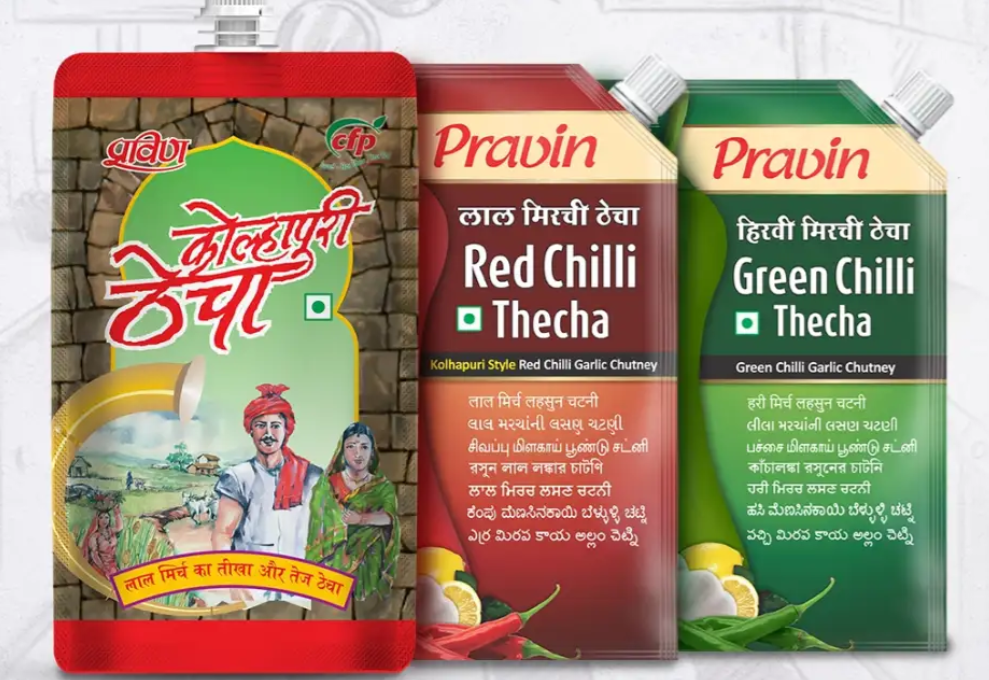
Thecha (ठेचा):
Thecha is a traditional Maharashtrian condiment known for its fiery spice, typically made with green or red chilies, garlic, coriander, salt, ginger, and other flavorful ingredients. The word “Thecha” (ठेचा) originates from the Marathi verb “ठेंचणें” (ṭheñcaṇẽ), meaning “to pound, to bruise, or to knock,” reflecting the pounding method used to prepare this condiment. This verb shares its root with the Sanskrit-derived Hindi word “ठेस” (ṭhes), meaning a knock or blow, as in the phrase “ठेस लगना” (ṭhes lagnā), which translates to “receiving a blow.” In eastern India (Bihar, Jharkhand, and eastern UP), a similar dish is prepared by crushing raw mangoes, green chilies, radish, carrot, mustard seeds, salt etc. This dish is called कूच्चा kūccā (kuccha), which derives from the verb कूचना kūcnā (to crush, to grind).
A popular variety of Thecha is Khandeshi Thecha, originating from Khandesh, a historical region in northwestern Maharashtra. Known for its cultural richness and fertile lands along the Tapti River, Khandesh is home to a blend of Marathi, Ahirani, and tribal traditions.
Recipe: Khandeshi Thecha (खानदेशी ठेचा)
Ingredients:
- Green chilies
- Garlic
- Salt
- Coriander
- Peanuts
- Oil
Instructions:
- Heat oil in a pan and roast the peanuts and green chilies until they are aromatic and lightly browned.
- Use a mortar and pestle to grind the roasted peanuts, chilies, garlic, salt, and coriander into a coarse paste for an authentic flavor. Avoid using a mixer grinder.
- Transfer the mixture back to the pan with some oil and roast it thoroughly until fragrant and well-cooked.
- Your Khandeshi Thecha is now ready to serve!
(Source: गप्पागोष्टी दिवाळी अंक, 2018)
Chutney (चटनी):
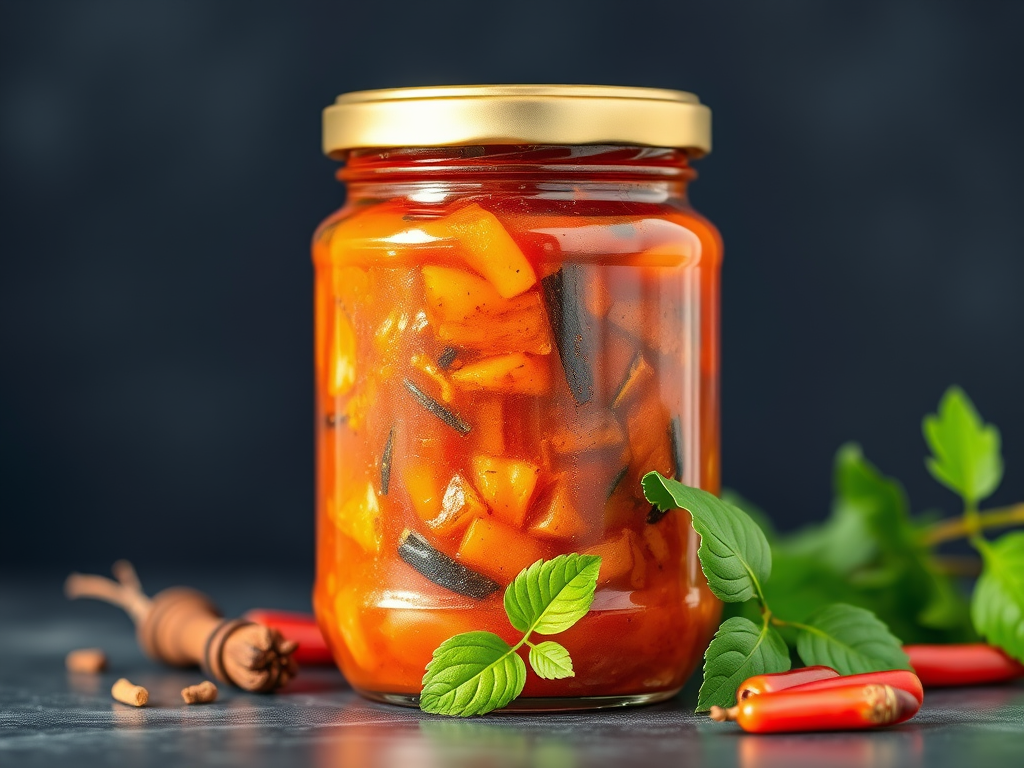
The word “Chutney” (चटनी in Hindi, चटणी in Marathi) refers to a variety of Indian condiments prepared with chilies, salt, and several other ingredients. The term is derived from the verb “चाटना” (caṭnā), meaning “to lick” or “to taste,” which itself originates from the Prakrit word “caṭṭei” (licks).
Chutneys hold a special place in Indian culinary traditions, often varying by region and ingredients. For instance, Mahatma Gandhi was known to enjoy Neem leaf (Azadirachta indica) chutney, as noted by American journalist Louis Fischer during his visit to Sabarmati Ashram. When Fischer first visited the Sabarmati Ashram, he was invited for lunch. The cook hesitated to serve him the bitter Neem chutney, but Gandhiji insisted. Believing it to be a special dish, Fischer took a large bite, only to find it bitter as poison. When he inquired about it, Gandhiji explained that this was called अस्वाद व्रत (asvāda vrata), meaning abstinence from taste.
A Story of Hunger: The Taste of Simplicity
Once, a king lost his way in the forest while hunting, accompanied by his minister. Tired and hungry, they stumbled upon a small hut where an old woman warmly welcomed them. Oblivious to their royal status, she prepared a simple meal of Roti and Chutney made with grass. Apologizing for the humble fare, she served it to the famished travelers. The king and minister, driven by hunger, found the meal incredibly delicious and praised her cooking.
The next day, the king rewarded her generosity and returned to his palace. Inspired, the royal chef prepared the same Roti and grass Chutney, thinking the king favored it. However, when the king tasted it without the hunger of the previous day, he became furious and dismissed the chef. This story highlights the profound truth that hunger transforms even the simplest meal into a feast of flavors.
Discover more from Linguistica Indica
Subscribe to get the latest posts sent to your email.
 Linguistica Indica