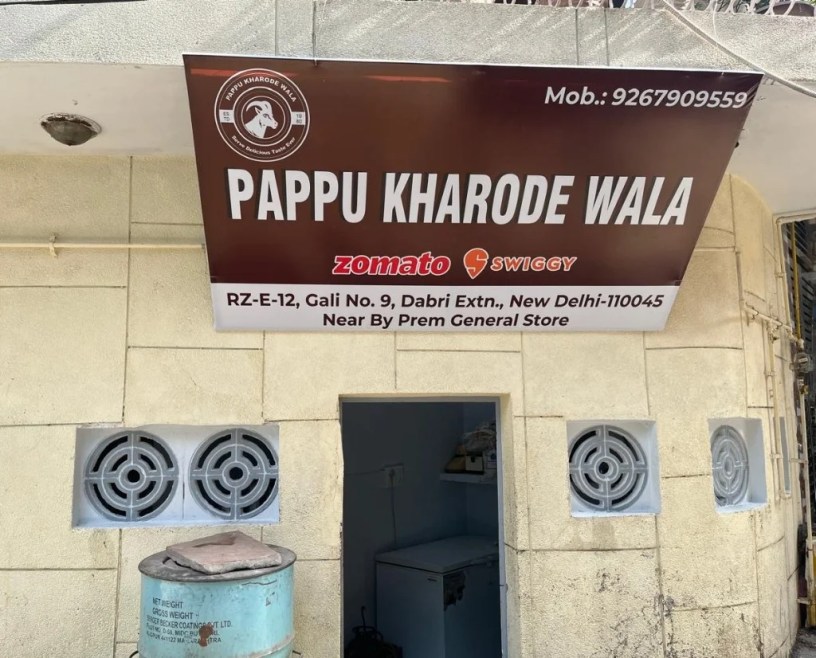
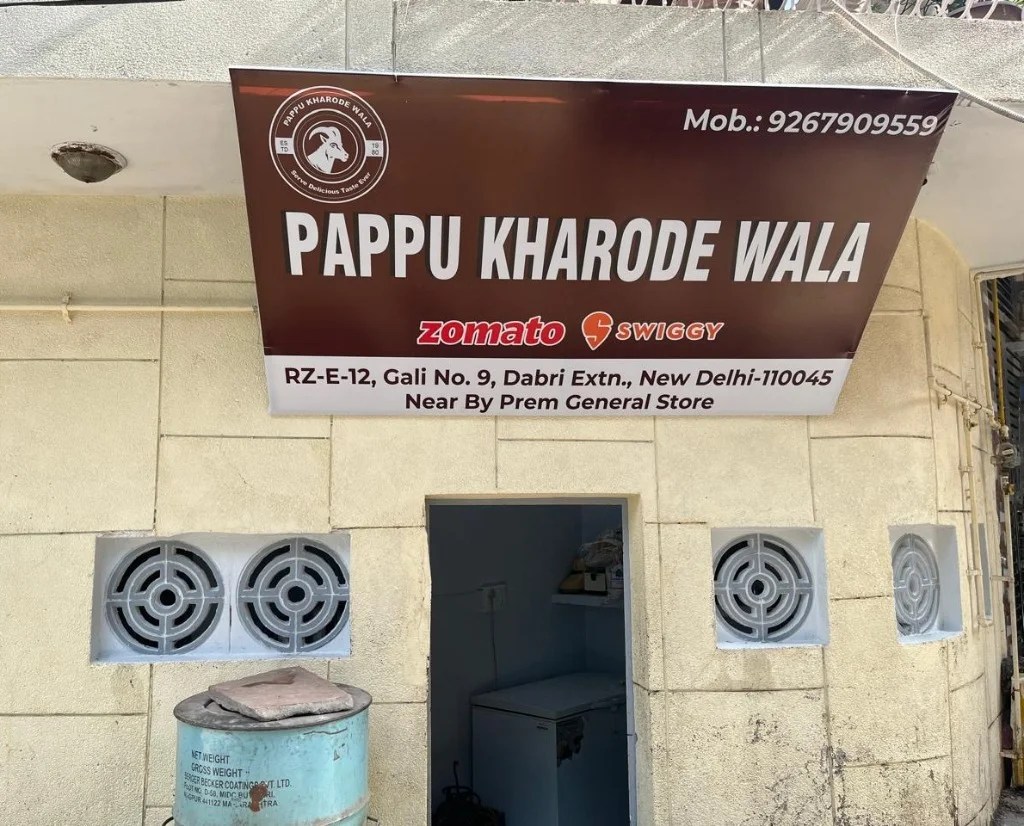
In the Hindi novel Chak Pīrā̃ Kā Jassā चक पीराँ का जस्सा (1977), set in undivided Punjab and written by the legendary Hindi writer from Punjab (India), Balwant Singh, one of the main characters, बग्गा सिंह Baggā Sĩngh, is very fond of kharoṛe kā sālan खरोड़े का सालन. Although this dish was considered inferior and the more discerning would avoid it, Bagga Singh would die for kharoṛe kā sālan.
When I lived in Delhi, I used to see खरोड़े, पेटी, सिरी—Kharoṛe, peṭī, sirī, written on the boards of small dhabas and carts selling these rather unknown food items, especially around liquor vends (popularly known as ṭhekā ठेका in Delhi). It was obvious they were selling meat dishes, but of which animal or bird, I was not sure. So I asked a Tāu (uncle), who was a long-time resident of Delhi, “What do they sell?” I came to know from Tāu that the meat dishes sold at these places were somewhat looked down upon and were mainly consumed by the poor and sundry during winters. With the abundance in which they were found in far-flung parts of Delhi, I could not stop myself from finally visiting one of those kiosks.
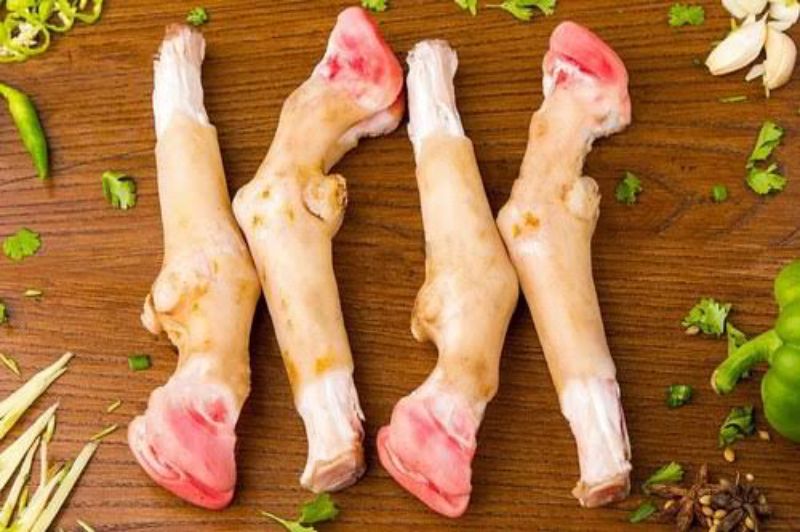
There I realised that Kharoṛe खरोड़े is a soup made from the legs of goat or lamb; thus, kharoṛe kā shorba खरोड़े का शोरबा (kharoṛe kā shorbā) is essentially a lamb/goat trotter soup. But the word Kharoṛe caught my attention. The word खरोड़े means trotters/hooves of goat or sheep in Punjabi, Dogri, and other neighboring languages, and is derived from its singular form kharoṛā खरोड़ा (leg of sheep or goat), which is further derived from khuroṛā खुरोड़ा ‘hoof’, ultimately from Sanskrit khura खुर ‘hoof’, combined with a pleonastic suffix -ड़ा ṛā. The word खरोड़ा kharoṛā is synonymous with पाया pāyā, which is a more popular term for animal feet used in cooking. Since these were often the cheaper and discarded parts of the animal, Kharoṛe खरोड़े was not a favorite among affluent people of Delhi, but rather among those who could not afford pricier cuts. Cooking Kharoṛe is also a tedious process, as it involves cleaning the hooves and then cooking them for a long period over low heat.
I also realised that पेटी peṭī (also pronounced पोटी poṭī) is a curry made with goat or sheep’s tripe and intestines. The word peṭī is obviously derived from the Hindi word पेट peṭ ‘stomach/belly’, while poṭī (tripe and intestines) is related to पोटा poṭā, the Hindi word for gizzard, also called ventriculus, a thick-walled, muscular pouch in the lower stomach of many birds and reptiles that grinds food, often with the aid of ingested stones or grit. This word is related to the Marathi word पोट poṭ ‘belly’. The Marathi word poṭ ‘stomach’ is derived from Prakrit poṭṭa पोट्ट, which is likely related to Kannada ಹೊಟ್ಟೆ hoṭṭe ‘stomach, belly’ and Telugu పొట్ట poṭṭa ‘belly’. Food items prepared with chicken poṭā are normally referred to as पोटा कलेजी poṭā kalejī, i.e., chicken liver.
सिरी sirī, on the other hand, refers to a curry made from the head of a goat or sheep. The term sirī is derived from the Hindi word सिर sir ‘head’.
So, what once appeared as obscure and somewhat unappealing items on roadside boards turned out to carry a deep linguistic and cultural history of its own. Kharoṛe, peṭī, and sirī are the remnants of an older food culture where every part of the animal was used, named, and remembered. What is dismissed as inferior by some often preserves layers of language, region, and memory of proletariat cuisine that more refined cuisines of the city quietly forget.
Discover more from Linguistica Indica
Subscribe to get the latest posts sent to your email.
 Linguistica Indica