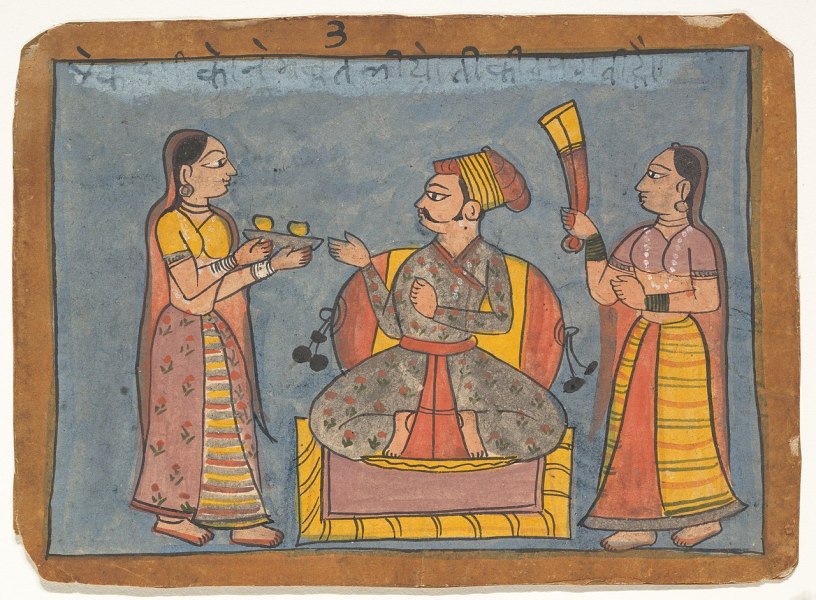
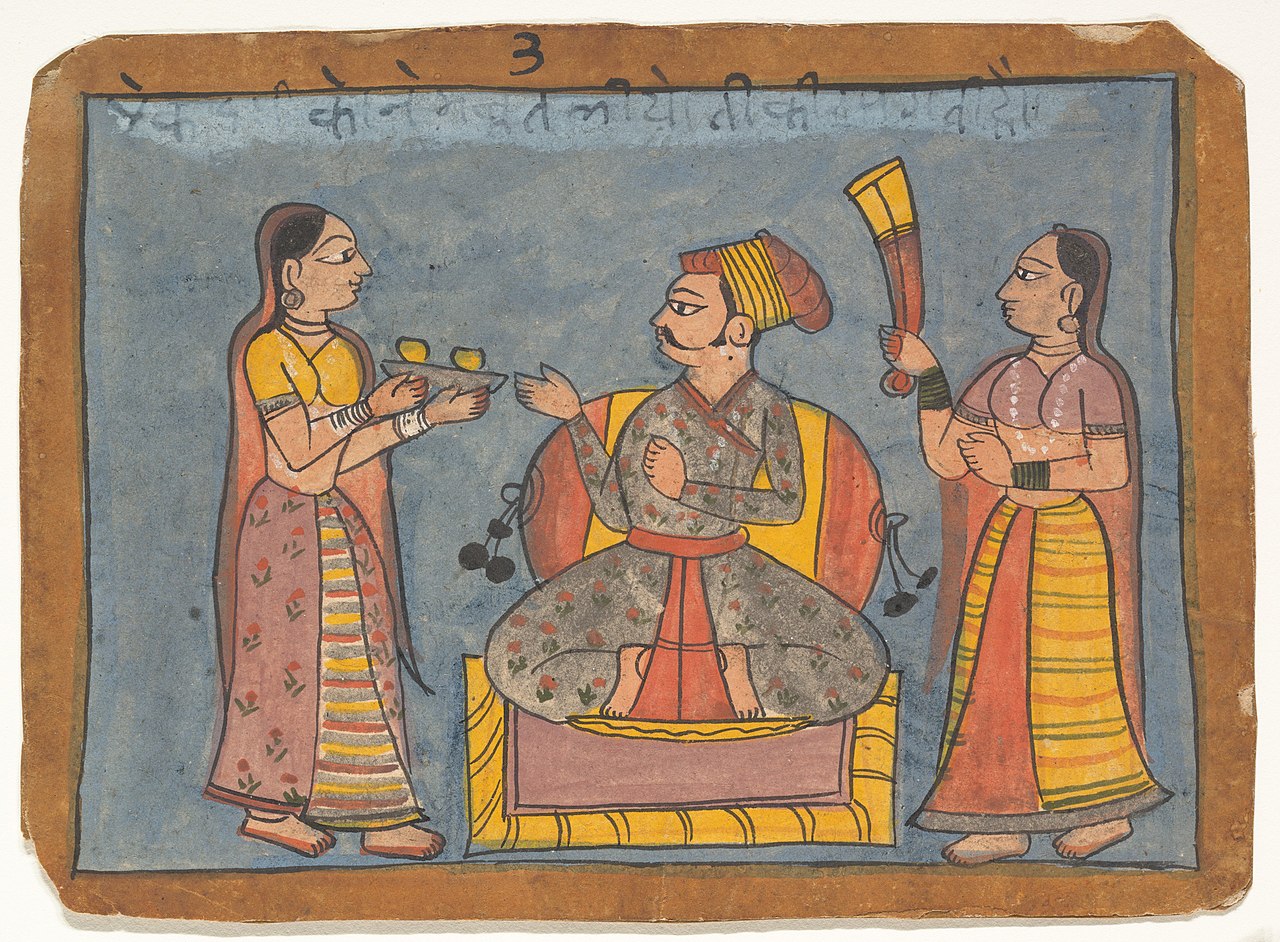
In the retelling (andekhā antas अनदेखा अंतस – read below) of the story of the brave well digger Jasmā Ōḍan by the famous Rajasthani writer Vijaydan Detha, the king who is in love with her is constantly greeted with the cries of khamā/khammā ghaṇī (खमा / खम्मा घणी). A visitor to the western parts of Rajasthan (India) may have heard this unique greeting Khama Ghani instead of the usual Namaste or Ram-Ram or Pranam.
In Marwari and its sister languages spoken in Rajasthan (India), khamā/khammā ghaṇī (खमा / खम्मा घणी), and its reply ghaṇī khamā/khammā (घणी खमा/खम्मा), function as general respectful greetings analogous to namaste or namaskār. There are several theories regarding the etymology of this phrase.
Although the first element is clearly derived from Sanskrit kṣamā (क्षमा, “forgiveness, pardon”), contrary to popular perception it is not a loan translation of gustāḵẖī muʻāf (गुस्ताख़ी माफ़, “pardon my rudeness; excuse me”). The second element, ghaṇī (घणी), means “very much” or “a lot” and is derived from Sanskrit ghana (घन, “dense”).
Another popular folk etymology relates khamā, rather fancifully—to Persian k͟hair-ō-‘āfiyat (ख़ैर-ओ-‘आफ़ियत, “health and prosperity; well-being”) or even to the phrase k͟hair-ō-amā̃ zyādā bāsud (ख़ैर-ओ-अमाँ ज़्यादा बासुद). These are merely speculative.
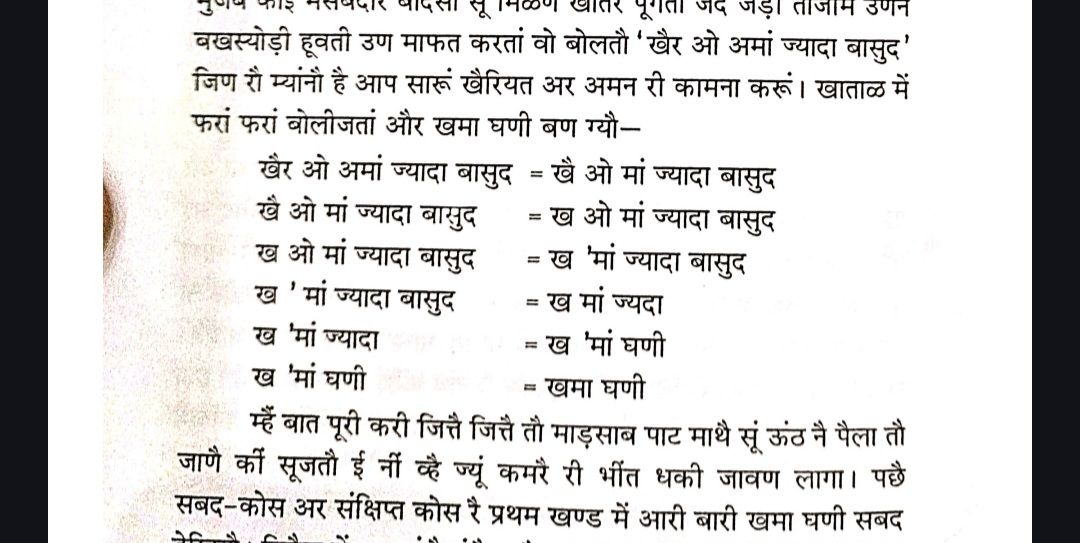
My contention, as discussed by Badri Prasad Sakariya and Bhupatiram Sakariya (1977: 268), is that khamā/khammā ghaṇī is not used by speakers to ask forgiveness, but rather as a respectful greeting to wish well upon a king, a teacher, or any honorable person. It may be compared with Sanskrit expressions such as jaya (जय, “victory!”) or āyuṣman (आयुष्मन्, “long live,” vocative of आयुष्मत् āyuṣmat). Khammā/khama can also be used as a polite agreement marker when addressing a noble or honorable person.
I further suggest that khamā/khammā ghaṇī (खमा / खम्मा घणी) may have a Jain origin, as indicated by Jain titles prevalent in Rajasthan and Gujarat. The title khamāsamaṇo/khamāsamana (खमासमणो/खमासमन) is derived from kṣamāśramaṇa क्षमाश्रमण, a respectful term used in Jainism for a high-ranking monk, orator, or Guru, meaning “one rich in forgiveness and restraint (śramaṇa)” (Tulsi & Mahapragya 1997: 37). The word itself derives from kṣamā (“forgiving”) and śramaṇa (“ascetic”). Thus, khamā/khammā ghaṇī may be compared to Hindi expressions such as kṣamā-śīl (क्षमा-शील, “of forgiving disposition”) or kṣamā-sāgar (क्षमा-सागर, “ocean of forgiveness”), which are often used as titles of a deity regarded as a supreme being.
In the 17th-century Rajput chronicle Nainsi ri Khyāt (नैणसी री ख्यात, naiṇsī rī khyāt) written in Marwari and Dingal by Muhnot Nainsi (मुहता नैणसी), a Rajput noble, Khetsiha (खेतसीह), says khama to himself after killing a groom whom the welcoming party had greeted with khama. Khetsiha kills him out of jealousy, as the bride was going to marry someone who had previously been betrothed to him. The passage reads:
इतरै माहै खेतसीह वाहीज। ताहरां वींदनूं ‘खमा’ कहियो। ताहरां खेतसीह कहियो — ‘खमा मो खेतसीहनूं ।
itrai māhai khetsīh vāhīj. tāhrā̃ vīndnū̃ ‘khamā’ kahiyo. tāhrā̃ khetsīh kahiyo — ‘khamā mo khetasīhnū̃ .
[Sakariya 1994]
Narottamdas Swami (1988), on the other hand, suggests that khamā/khammā ghaṇī is an assimilated form of Sanskrit āyuṣmān (आयुष्मान्, “long-lived,” nominative). He proposes that āyuṣmān changed to āyukhmān, after which āyu was lost. This, however, is a rather speculative conjecture.
In sum, khamā/khammā ghaṇī (खमा / खम्मा घणी) is not an expression of apology, but rather a culturally embedded form of सम्मान (respect) and अभिवादन (greeting and well wishes) within the Rajasthani linguistic sphere. While its first element is etymologically linked to Sanskrit kṣamā (“forgiveness”), its actual usage has shifted toward honorific greeting rather than supplication. Competing explanations, whether from Persian influence or speculative phonological transformations from āyuṣmān, remain unconvincing when weighed against linguistic and contextual evidence. The comparison with Sanskrit expressions such as jaya and āyuṣman, as well as the possible connection to Jain honorific titles like kṣamāśramaṇa, suggests that the phrase belongs to a broader Indic tradition of respectful address that conveys reverence, auspiciousness, and social hierarchy. Thus, khamā/khammā ghaṇī inherits a unique historical, religious, and sociolinguistic influences in Rajasthan and adjoining regions.
References
Muhaṇota Naiṇasī, & Badarī Prasāda Sākariyā. (1994). Muṃhatā Naiṇasī viracita Muṃhatā Naiṇasīrī khyāta, Bhāga 4. (Dvitīyā vṛtti.). Rājasthāna Prācyavidyā Pratiṣṭhāna.
Sakariya Badri Prasad (ed.), Sakariya Bhupati Ram (ed.), (1977). Rajasthani Hindi shabdkosh. Jaipur: Panchasheel Prakashan.
Swami, N. (1988). Khammā Śabd rī Vyutpatti aur Arth. Rājasthānī Gaṅgā (~ Rājasthānī Jñānpīṭh Sansthān), 4(1–2).
Tulsi, G., & Mahapragya, A. (1997). Śramaṇ pratikramaṇ. Jain Vishwa Bharti Prakashan.
अनदेखा अन्तस – विजयदान देथा (नया ज्ञानोदय, नवंबर 2009)
Discover more from Linguistica Indica
Subscribe to get the latest posts sent to your email.
 Linguistica Indica