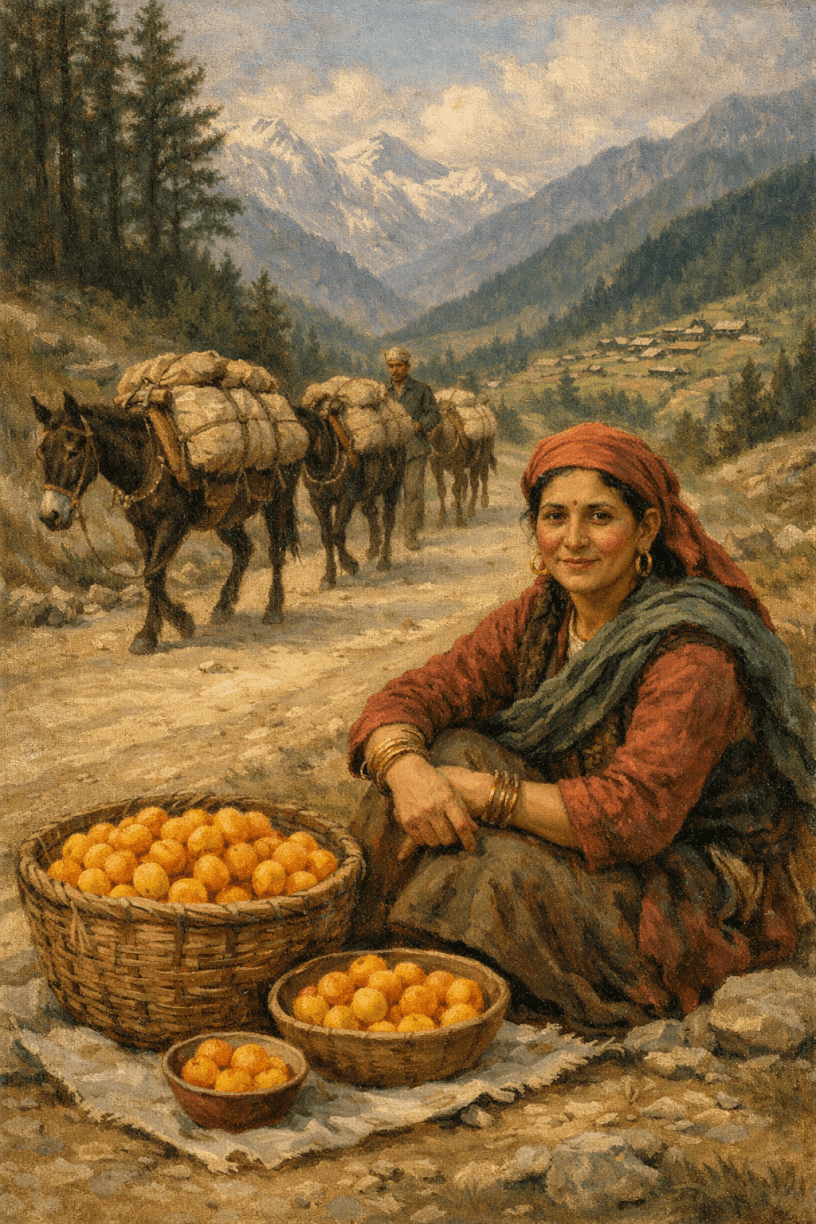
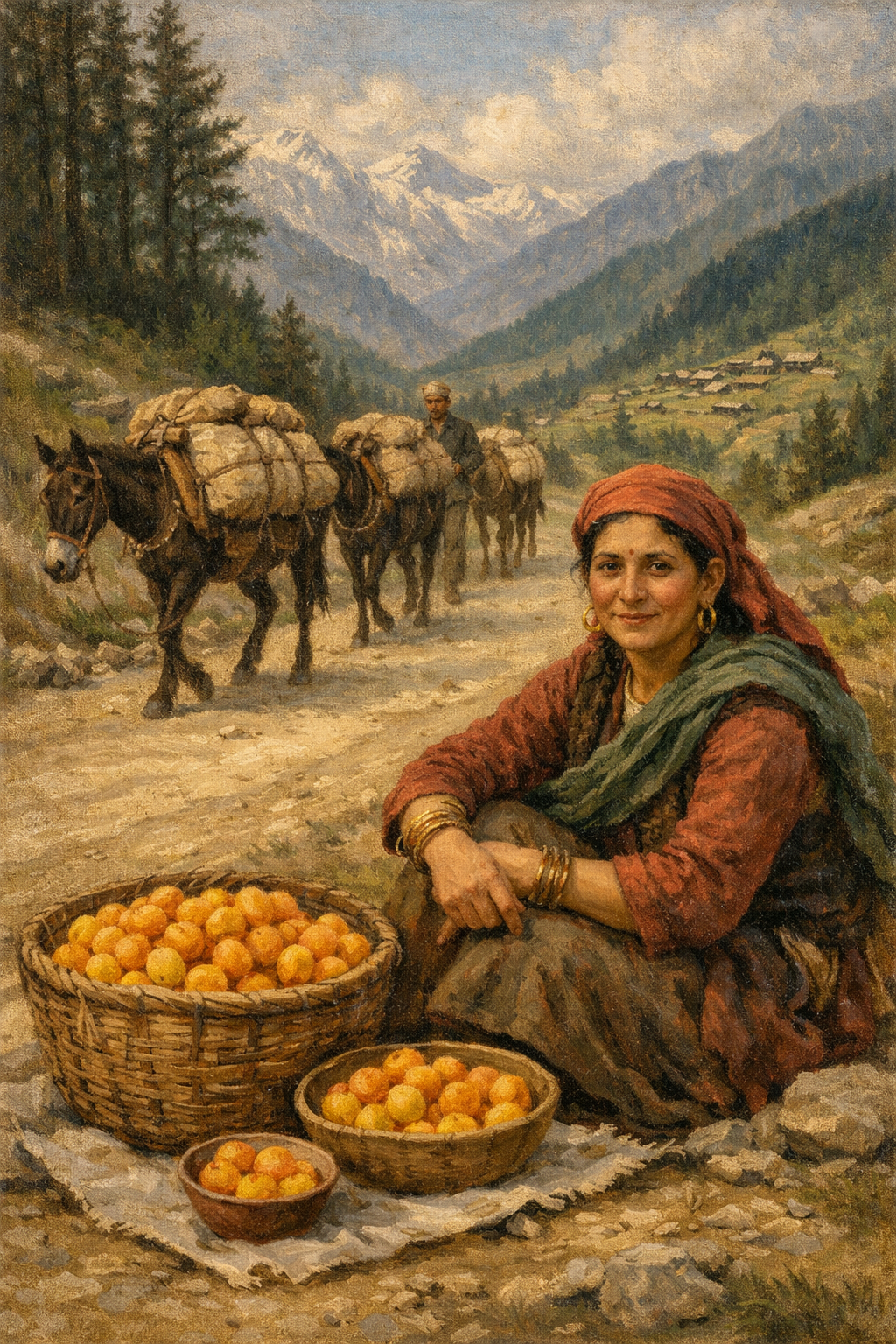
“पहाड़ की स्मृति” (English: Memories of the Hills) by noted Hindi writer Yashpal (1903–1976) is a deceptively quiet and simple story whose emotional depth emerges through its restraint and its conversations. Set within the twentieth-century landscape of the rural Himalayan foothills of India, it reflects on distance, attachment, and the fragile threads that bind lives across uneven social and geographical worlds. There are also subtle hints of an early environmental sensibility in its evocation of trees, rivers, and hills. Yashpal’s realism is understated and observational; rather than relying on dramatic turns, the story unfolds through conversation, repetition, and the textures of ordinary life. In doing so, it becomes a quiet meditation on love, separation, and penance, while remaining attentive to the social and material conditions that shape such experiences.
I have been reading this story in my classes here at Leiden for a couple of years, and each time it evokes similar emotions in me and in my students: quiet unease, compassion, and reflection. Its power lies in the atmosphere it creates and in the questions it leaves lingering.
My English translation is intended primarily as an aid for close reading of the Hindi original. It remains deliberately close to the syntax, repetitions, and tonal restraint of the source text, at times retaining a certain literalness in English. The aim is not to produce a fully adapted literary version, but to provide an interpretive scaffold through which readers can engage more attentively with Yashpal’s language and narrative texture.
You can read the Hindi original here:
You can read my English translation here
Discover more from Linguistica Indica
Subscribe to get the latest posts sent to your email.
 Linguistica Indica