
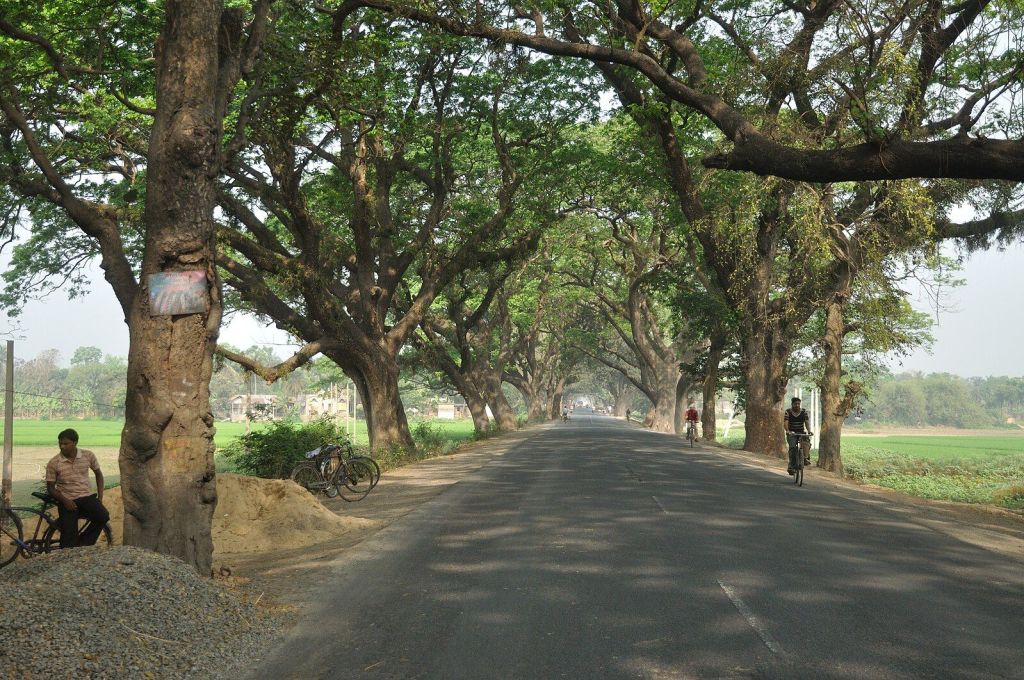
Unlike the bustling metropolises of Delhi or Mumbai, our small town in winter had an eerie stillness that blanketed everything. By seven in the evening, the streets were deserted, the occasional flicker of dim light coming only from sporadic power backups. Frequent power cuts and barely functional streetlights meant you had to be home before dark, or risk being stranded in the cold, desolate night. There was an unspoken rule in the town: venture out late at your own peril.
I was eight, perhaps nine, on one of those biting winter evenings when a sharp pain suddenly flared in my right ear. I clutched my ear, tears welling up as the ache intensified. When my father returned from work, my mother shared my predicament with him. Without hesitation, he decided to take me to a doctor who lived about fifteen minutes away by scooter. The doctor’s home-clinic stayed open until 8 PM, so there was just enough time.
Bundled in my woolen monkey cap, I reluctantly climbed onto the back of my father’s scooter. The night was inky black, the only illumination coming from the scooter’s headlight. My ear throbbed as I held onto the metal clutch behind my father’s seat, trying to ignore the numbing cold that bit through my gloves.
The streets were eerily empty, save for the occasional vehicle passing us in the opposite direction. As we approached the outskirts of our neighborhood, the road became flanked by vast, low-lying fields. My father, usually a swift driver, slowed down due to the lack of streetlights and the dense mist hanging in the air. Ahead of us loomed a stretch of road bordered by a bamboo grove and a row of ancient tamarind trees. Their dark, tangled branches created an oppressive canopy, blocking what little moonlight there was.
Just as we reached the densest part of the grove, a loud *thud* shattered the silence. My father immediately slowed the scooter, keeping the engine running so the headlights stayed on. The beam of light revealed the shadowy outlines of the trees, but nothing else.
Then we heard it—a voice from the bushes, low and insistent. “Sir, sir… Guruji, Guruji!” My father, a college teacher, recognized the address and instinctively turned his head toward the sound. “Boliye, kya chahiye? (Speak, what do you need?)” he called out in Hindi.
At the same time, I heard a faint rustling from the other side of the road. I turned my head and froze. Emerging from the darkness was a woman draped in a white saree with a red border. She moved with an unsettling limp, her silhouette distorted in the scooter’s dim afterglow. But what terrified me most was her face—or lack thereof. Her head seemed incomplete, obscured by shadow or something unnatural. She limped toward us with deliberate steps.
My heart pounded. “Papa, chaliye yahan se (Papa, let’s go from here!)” I screamed, clutching my father’s coat.
Before my father could respond, the rustling in the bushes intensified. A group of men began emerging, their figures faintly visible in the dim light. They called out again, this time more forcefully. My father’s instincts kicked in. Without waiting to see more, he twisted the throttle, and the scooter surged forward. The men shouted behind us, their footsteps pounding against the road, but the scooter’s speed left them far behind.
We reached the doctor’s house, both of us shaken. My father parked outside, and we entered the well-lit clinic. The familiarity of the place was a welcome relief. The doctor, a kind man with a reassuring demeanor, examined my ear. To my surprise, the pain had vanished. “There’s an infection,” he explained, handing my father a small bottle of ear drops. My father paid the fee, and we left.
The return journey took us through a longer, safer route. By then, the power had been restored, and streetlights illuminated our path. We arrived home without further incident, but the events of the evening lingered in my mind. Who were those men in the bushes? And who—or what—was that woman?
Months later, we learned from the local newspaper that several waylaying incidents had been reported in the bamboo grove area. A gang had been targeting late-night travelers. My father and I had likely escaped a trap that night. But even with that explanation, the memory of the limping woman in the red-bordered saree haunted me. No report mentioned her. She didn’t fit into the story of petty criminals.
To this day, I wonder: was she an accomplice? Or was she something else entirely, a specter tied to the darkness of that winter evening?
Discover more from Linguistica Indica
Subscribe to get the latest posts sent to your email.
 Linguistica Indica