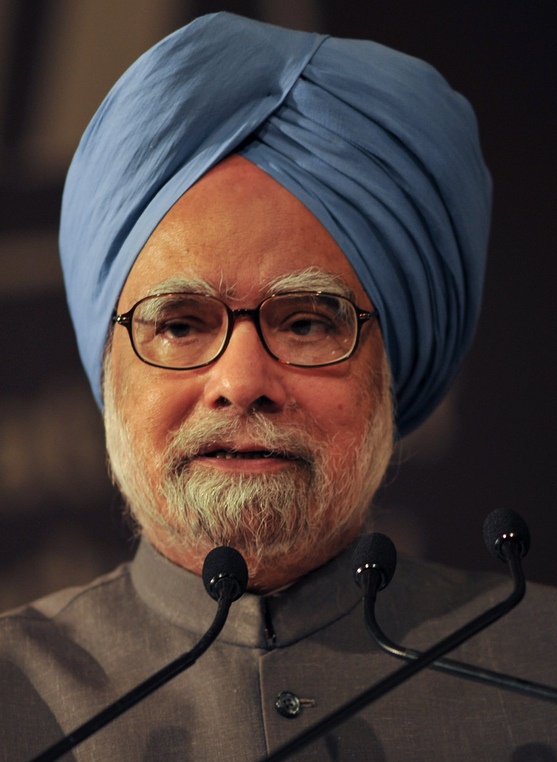

Dr. Manmohan Singh (ਮਨਮੋਹਨ ਸਿੰਘ / मनमोहन सिंह) was a renowned Indian economist, academic, and politician who served as the 13th Prime Minister of India from 2004 to 2014. Celebrated for his integrity and economic acumen, he played a pivotal role in liberalizing India’s economy as Finance Minister in the 1990s. A prominent member of the Indian National Congress, he is widely regarded for his contributions to shaping modern India’s economic policies.
The Name Manmohan
The first element, Manmohan (मनमोहन / ਮਨਮੋਹਨ), means “one who charms or captivates the mind/heart” in Hindi, Punjabi, and Urdu. It is an epithet of Lord Krishna. According to Sanskrit grammar, the name should traditionally be spelled Manomohana (मनोमोहन), following the rules of Sandhi (combination). In this form, manas (मनस् > मनः manaḥ, mind) + mohana (मोहन, enchanting) combine to form Manomohana. This process is evident in names like Bengali playwright Manomohan Basu (মনোমোহন বসু) and other compound words such as:
– Manoratha (मनोरथ, desire) = manaḥ (mind) + ratha (vehicle)
– Manorama (मनोरम, beautiful) = manaḥ (mind) + rama (pleasing)
– Manovikāra (मनोविकार, emotion) = manaḥ (mind) + vikāra (transformation)
However, in modern Hindi and Punjabi, the name Manmohan can also be understood as a compound of man (मन, mind/heart) and mohan (मोहन, charmer), adhering to the phonetic conventions of these languages.
The Name Singh
The second element, Singh (ਸਿੰਘ / सिंह), is a common surname in India, particularly among Sikh men and other communities in northern India, such as Rajputs. The name originates from the Sanskrit word siṁha (सिंह), meaning “lion.” Interestingly, the contemporary English spelling Singh better preserves the original Prakrit sound compared to modern Hindi, where it is often written as Sĩh (सिंह) following Sanskrit spelling but pronounced Siṅgh (सिंघ).
This phonetic shift from siṁha to siṁgha occurred in Prakrit languages due to a linguistic rule. When an anusvāra (nasal sound) precedes the consonant h (ह्), it often changes h to gh (घ्). [see rule 266 in ‘A grammar of the Prākrit languages’ by Richard Pischel, 1957 (Subhadra Jha’s Translation)]
Examples include:
– Siṁha (सिंह) → Siṁgha (सिंघ)
– Saṁhāra (संहार, destruction) → Saṁghāra (संघार)
This transformation is also reflected in the Punjabi spelling Siṅgh* (ਸਿੰਘ).
The name Manmohan Singh beautifully intertwines the cultural, linguistic, and historical significance of Indian languages. The first name, Manmohan, carries spiritual and poetic connotations rooted in Sanskrit and regional languages, while the surname Singh symbolizes strength and valor. Together, the name reflects a profound legacy, resonating with the achievements and character of the man who bore it.
Discover more from Linguistica Indica
Subscribe to get the latest posts sent to your email.
 Linguistica Indica