
© Abhishek Avtans
वारे न्यारे होना vāre nyāre honā means to become well off, to flourish, to prosper, to thrive, to have a stroke of fortune, to earn great profit etc. Renowned Hindi writer Kamleshvar uses this idiom in his novella समुद्र में खोया हुआ आदमी samudra mẽ khoyā huā ādmī (1960, 1982)
सिन्धी ट्रांसपोर्ट कम्पनी की ब्रांच जब दिल्ली में खुली, तब श्यामलाल बुकिंग क्लर्क होकर चले आए थे। चार ट्रक उनके साथ आए थे, इसलिए एक में वह अपना पूरा कुनबा बटोर लाए थे। दोनों जवान लड़कियों, बीमार बीवी और अकेले लड़के को आखिर किस आसरे पर छोड़ आते। सोचा यही था कि रफ्ता रफ्ता वह दिल्ली ब्रांच के मैनेजर बन जाएँगे और फिर धीरे-धीरे अपना सिलसिला चालू कर लेंगे। लाइसेन्स उत्तर प्रदेश सरकार से मिल जाएगा। अपना एक ट्रक भी चालू हो गया तो वारे-न्यारे हो जाएँगे ।
समुद्र में खोया हुआ आदमी (1960, 1982) – कमलेश्वर
[sindhī ṭrā̃saporṭ kampanī kī brā̃c jab dillī mẽ khulī, tab śyāmlāl bukĩg klark hokar cale āe the. cār ṭrak unke sāth āe the, isalie ek mẽ vah apnā pūrā kunbā baṭor lāe the. donõ javān lar̤kiyo, bīmār bīvī aur akele lar̤ke ko ākhir kis āsre par chor̤ āte. socā yahī thā ki raphtā raphtā vah dillī brā̃c ke mainejar ban jāẽge aur phir dhīre-dhīre apnā silsilā cālū kar lẽge. lāisens uttar pradeś sarkār se mil jāegā. apnā ek ṭrak bhī cālū ho gayā to vāre-nyāre ho jāẽge ]
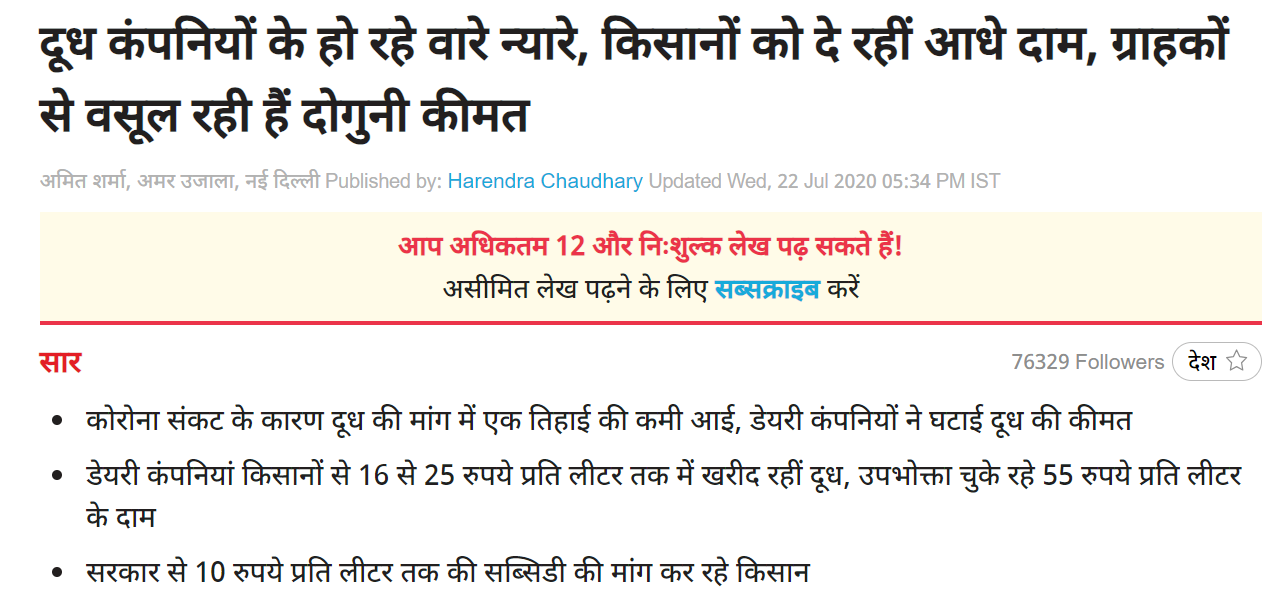
Another example of वारे-न्यारे, can be seen in the headline of this news item in Amar Ujala newspaper (22 July 2020):
दूध कंपनियों के हो रहे वारे न्यारे, किसानों को दे रहीं आधे दाम, ग्राहकों से वसूल रही हैं दोगुनी कीमत
dūdh kãpniyo ke ho rahe vāre nyāre, kisānõ ko de rahī̃ ādhe dām, grāhkõ se vasūl rahī haĩ dogunī kīmat
This idiom is connected with another phrase वारा-न्यारा होना which means ‘to have a settlement’, ‘to have a final decision’ (किसी बात का पूरी तरह निपटारा, फ़ैसला होना kisī bāt kā pūrī tarah nipṭārā, faislā honā); and hence वारा न्यारा करना is ‘to decide’ ‘ to settle’. Now this phrase वारे न्यारे होना vāre nyāre honā is composed of two elements वारा vārā (plural is वारे vāre) which means benefit, gain, profit or saving; and न्यारा nyārā which means ‘to be distinct, separate, apart’. So when we say किसी के वारे न्यारे हो गये kisī ke vāre nyāre ho gaye we mean, the final settlement is done for someone i.e. his/her share of profit or gain has been decided. The first element वारा vārā is related to Hindi word वारना vārnā connected with Sanskrit word वारण vāraṇa (warding off, resisting, opposing) derived from verb root वृ vṛ ( to cover, to surround, to conceal). न्यारा nyārā is believed to be from Sanskrit *anyākāra अन्याकार (different , separate).
वारा also means the money or things which is rounded off on people head to ward off evil. Similar to सदक़ा sadqā i.e. alms / an offering (to avert misfortune) is a cultural practice in Indian subcontinent. For example black hen, black goat, oil, rice, spices, money etc. So the Hindi idiom वारा जाना or वारा होना i.e. किसी पर निछावर जाना या बलि होना vārā jānā or vārā honā i.e. kisī par nichāvar jānā yā bali honā is used by people (especially women) to express their extreme love in phrases such मैं (तुम पर) वारी जाऊँ maĩ (tum par) vārī jāū̃ (May I be sacrificed for you!).
In summary, one can say that वारे न्यारे होना vāre nyāre honā has evolved into a productive idiom to point towards a sort of ‘wind fall’.
References
Kamleshwar K. (1982). Samudra mein khoya hua aadmi. Rajpal.
Merriam-Webster. (n.d.). Windfall. In Merriam-Webster.com dictionary. Retrieved December 20, 2023, from https://www.merriam-webster.com/dictionary/windfall
Das, Syamsundar (1965-1975). Hindi shabdasagar. Navina samskaran. Kashi: Nagari Pracharini Sabha.
Apte, Vaman Shivaram (1957-1959). Revised and enlarged edition of Prin. V. S. Apte’s The practical Sanskrit-English dictionary. Poona: Prasad Prakashan.
Discover more from Linguistica Indica
Subscribe to get the latest posts sent to your email.
 Linguistica Indica