
© Abhishek Avtans
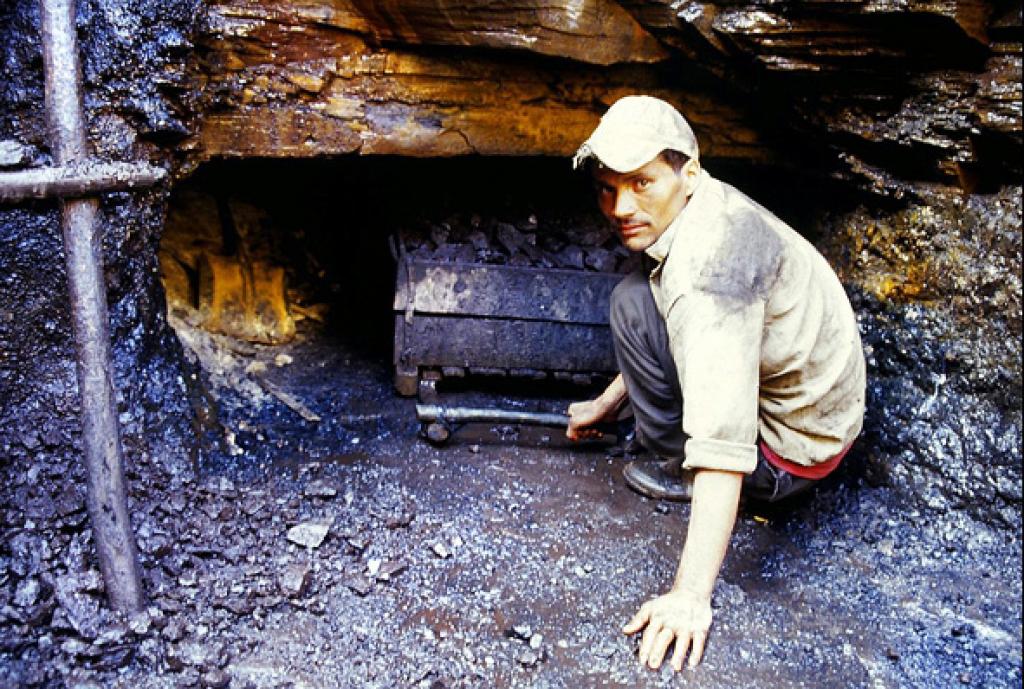
The successful rescue of 41 workers trapped in a section of the Silkyara tunnel in Uttarakhand, India, in November 2023, has brought attention to the daring feat of ‘rat-hole miners‘ who were deployed to manually drill and clear the passage to the trapped workers. “Rat-hole mining” refers to a hazardous and illegal method of extracting coal and other minerals, primarily practiced in the northeastern Indian state of Meghalaya. This type of mining involves digging narrow, vertical shafts into the ground to reach coal seams. These shafts are often just large enough for a person (usually young boys or men) to enter pits/quarries, resembling the size of a rat hole, hence the name. Because of environmental hazards and accidents involving the deaths of several ‘rat-hole’ miners due to extremely unsafe conditions inside these mines, the National Green Tribunal (government of India) banned rat-hole mining in the year 2014. Although rat-hole mining is banned in India, this technique of mining is still illegally practiced in the country.
According to Majaw (2016), the English term ‘rat-hole mining‘ is primarily used in Meghalaya (India) and in my opinion, it was probably coined in the Khasi-Jaintia hills after the Nepalese term for this kind of pit mine, musākō dulō मुसाको दुलो (rat’s hole; the word for rat/mouse in Nepali musā मुसा / मुसो musō is connected with Sanskrit मूषः mūṣaḥ i.e. rat/mouse which is a cognate word of English mouse). In Khasi, an Austroasiatic language spoken in Meghalaya, a coal mine is called krem-Dewiong. Here, the first element krem means a cave, and the second element Dewiong means coal. If we further analyze ‘Dewiong‘, it is made up of two parts: ‘Dew‘, which means soil, and ‘iong‘, which means black/dark blue. So, Dew-iong would mean black soil.
Another word for a coal mine in Khasi is Par-Dewiong, where the first element par means ‘to crawl’ or ‘to creep’, and the second element, Dewiong, means coal. This term itself signifies the technique of mining used in ‘rat-hole mining’ where a miner has to crawl into narrow pits to mine coal. The extracted coal is then carried out of the pit either by Ka Kali Dieng (wheelbarrows) or Ka Khoh (traditional conical cane baskets of the Khasi people).
Most of the rat-hole mines in Meghalaya are owned by local indigenous people from the state and they are located on private lands. Most rat-hole miners (workers) have a non-indigenous background, but there are also many local folks who work in these mines. These miners are poor people who may be migrant workers from neighboring states (Assam, Bihar, Jharkhand, UP, West Bengal etc.) or from other faraway places in India, Nepal, and even Bangladesh. A rat-hole mine owner is called mālik (from Hindi मालिक mālik, meaning owner) in Khasi language. Each rat-hole mine has a supervisor known as sōrdār (from Hindi सरदार sardār, meaning chief) who takes care of the day-to-day running of a rat-hole mine. A non-Khasi miner is often called a Dkhar in Khasi. Dkhar refers to a non-Khasi outsider or a person born from the marriage between a Khasi male and a non-Khasi female.
Rat-hole miners’ day starts early in the morning and ends by sunset. Many of these miners are young boys with flexible limbs. Because of their young and flexible bodies, they are preferred over older males. These mines are so narrow and constricted that miners have to bend or crawl for hours to work inside them. Indian public broadcaster Doordarshan published this short video clip of a young rat-hole worker working in a coal mine.
After a grueling day of work in a rat-hole mine, the miners usually indulge in a kind of betting known as teer (from Hindi तीर tīr, meaning arrow) for relaxation and amusement. In this betting game, the betters have to predict the last two digits of the total number of arrows that hit the target. Those who predict it right are announced as winners. A video explaining Teer betting of Meghalaya:
Despite the ban, Rat-hole miners still risk their lives daily to extract coal from the mines located in Meghalaya. Local government has been turning a blind eye to this illegal and dangerous practice because of the revenue coal mining brings to them through custom and excise duties.
References:
Majaw, B. (2016). Ending Meghalaya’s “Deadly Occupation”: India’s National Green Tribunal’s Ban on Rat-Hole Mining. Verfassung Und Recht in Übersee / Law and Politics in Africa, Asia and Latin America, 49(1), 34–52. http://www.jstor.org/stable/26160091
Biswas, S. (2023) How India’s ‘rat-hole’ miners freed 41 tunnel workers, BBC News. Available at: https://www.bbc.com/news/world-asia-india-67563247 (Accessed: 01 December 2023).
Singh, U. N. (1904). Khasi English Dictionary (P. Gurdon, Ed.). Mittal Publications.
Dutta, B. (2022). Mining, Displacement, and Matriliny in Meghalaya. Taylor & Francis.
Lepcha, C.K., & Lal, U. (Eds.). (2021). Communities, Institutions and Histories of India’s Northeast (1st ed.). Routledge. https://doi.org/10.4324/9781003245865
Discover more from Linguistica Indica
Subscribe to get the latest posts sent to your email.
 Linguistica Indica