
© Abhishek Avtans
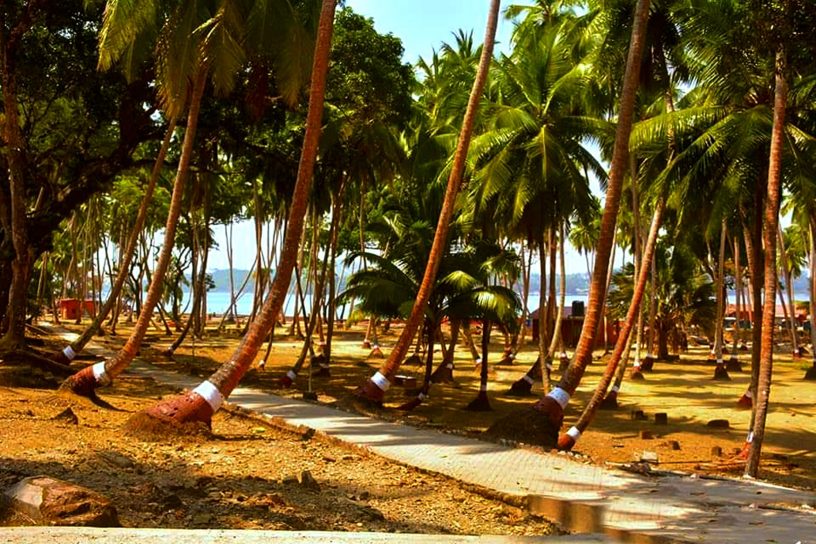
We arrived in the Havelock island (now known as Swaraj Dweep) in the Andamans sometime in December of 2006. We were living in Andamans since the last few months in order to document Great Andamanese language, and had waited long to visit Havelock. On our first day on this island with pristine beaches, and named after a British general Sir Henry Havelock, one uniquely odd thing we noticed was the large number of Israeli tourists. Young men and women sheltering from the heat of Andamans under the shade of thatched roof ‘hotels’ serving tea, Bengali sweets and some snacks. We entered one of them for a quick cup of Chai. In this ‘hotel’ we saw a group of bearded Israeli young men sitting together and talking in Hebrew. One of the men got up and asked the Bengali owner of the joint for some Barfis (Indian sweets made of milk). While one of his friends dished out a bottle of McDowell’s No.1 whiskey from his backpack, and started pouring the drink in glasses for their group. I looked in disbelief that they were going to drink that whiskey with those tiny super sweet Barfis. We returned to our guest house, while looking at tens of foreign looking hammocks tied on palm trees for free of cost sleeping, and portable tents spread under the trees. Most Israelis were actually making use of the free boarding made available by the nearby shops and kiosks. I did not see any Indians sleeping in those hammocks and tents. Perhaps this was due Indian apprehension about sleeping under a tree or open sky.
Every year more than fifty thousand Israeli backpackers visit India (total population of Israel in 2023 is 9.3 million). In scientific research on these Israeli travelers, they are usually categorized as ‘conquerors‘ and ‘settlers‘. The word conquerers from the Hebrew word Ha-kovshim (the conquerors), is used for those backpackers who visit India for adventure related activities like trekking, rock climbing, river rafting etc. and avoid interaction with locals generally. They show no interest in local people, culture and society, to the extent that many of them find Indians inferior, stinky, hairy, sweaty, cheating and intolerable. These Ha-kovshims arrive in India with their own closely knit groups and networks, and they keep to themselves with minimal contact with Indians, learning almost nothing from local populations, their languages and cultures. The Ha-kovshims call local Indian people hamekomiim in Hebrew which is a term used in Israel for local people living in occupied areas. Most of these travelers are young and have just finished their pazam (period of service in Israel Defense forces), and therefore they are in a way extending their military services in India by trekking or doing challenging outdoor activities in India.
On the other hand, is the group of Israeli travelers known as settlers, from the Hebrew word Ha-mitnahalim (the settlers). This group of Israeli backpackers are usually highly influenced by Indian culture and society. They practice Yoga, Reiki, Ayurveda and learn Indian languages (Hindi, Marathi, Bengali, Tamil) and crafts while spending time in India. They live among the Indians in small or big cities or villages, eat Indian food and are generally respectful towards local culture and traditions. Many of these backpackers are in the age group of 30 to 40 years and travel single or smaller groups. On asked about their time in India, they usual reply is that they did nothing i.e. they spent their time relaxing and doing daily chores. The most popular Hindi word among this groups of Israeli backpackers is Shānti शान्ति (peace).

Between 2009 to 2012, I visited several places in Himachal Pradesh for some linguistic field work on Pahari languages. In many of my bus trips to Himachal Pradesh, I met several travelers from Israel going to the hills in Himachal. Once I took a morning bus from ISBT Delhi to Dharamshala town in Himachal. On the bus, I met an Israeli traveler named Samuel who was going to McLeodganj near Dharamshala. During our candid conversation, I asked him why there were so many Israeli men and women traveling to India, especially Himachal. He told me he was actually hired by a family in Israel to look for a man who was believed to be lost in Himachal Pradesh, and his India trip was financed by that family. If he can find something about that lost person, it will bring closure to their family who had been looking for him since last two years. Samuel told me that many Israeli young men and women after their discharge from mandatory three years service in the Israel Defense Forces, opt to visit India to relax and rejuvenate from their grueling military conscription. Being one of the safest large countries in the neighborhood for Israeli citizens, India emerges as a favorite (and cheapest choice) among Israeli youth. Midway our bus stopped at a Dhaba, and we got down from the bus to have some lunch. As usual I asked for Tadka Dal with Rotis, and Samuel ordered just a single Roti. I was wondering how he is going to eat this Roti. I asked him – don’t you like Dal or curries ? He replied – I like curries, but I am not so hungry and want to keep my stomach light. When our food was served, Samuel took out a ripened yellow banana from his bag, and made a Roti-Banana roll, and enjoyed his unique lunch. I, on the other hand, relished my Dhaba style Tadka Dal with freshly made Tandoori Rotis.
On an another trip to Himachal, I visited Kasol, where I entered a non-descript restaurant, the menu was printed in Hebrew, and the man who came to take the order for food, spoke first in Hebrew. I pleaded my ignorance, and asked in English, if they have a menu in English. He said sure, and handed me a menu of Kosher dishes printed in English. Probably, I was the only Indian sitting in that Israeli restaurant of Kasol (India).
Discover more from Linguistica Indica
Subscribe to get the latest posts sent to your email.
 Linguistica Indica
Very interesting to read this article.